The Hidden Signals Driving Workplace Interactions

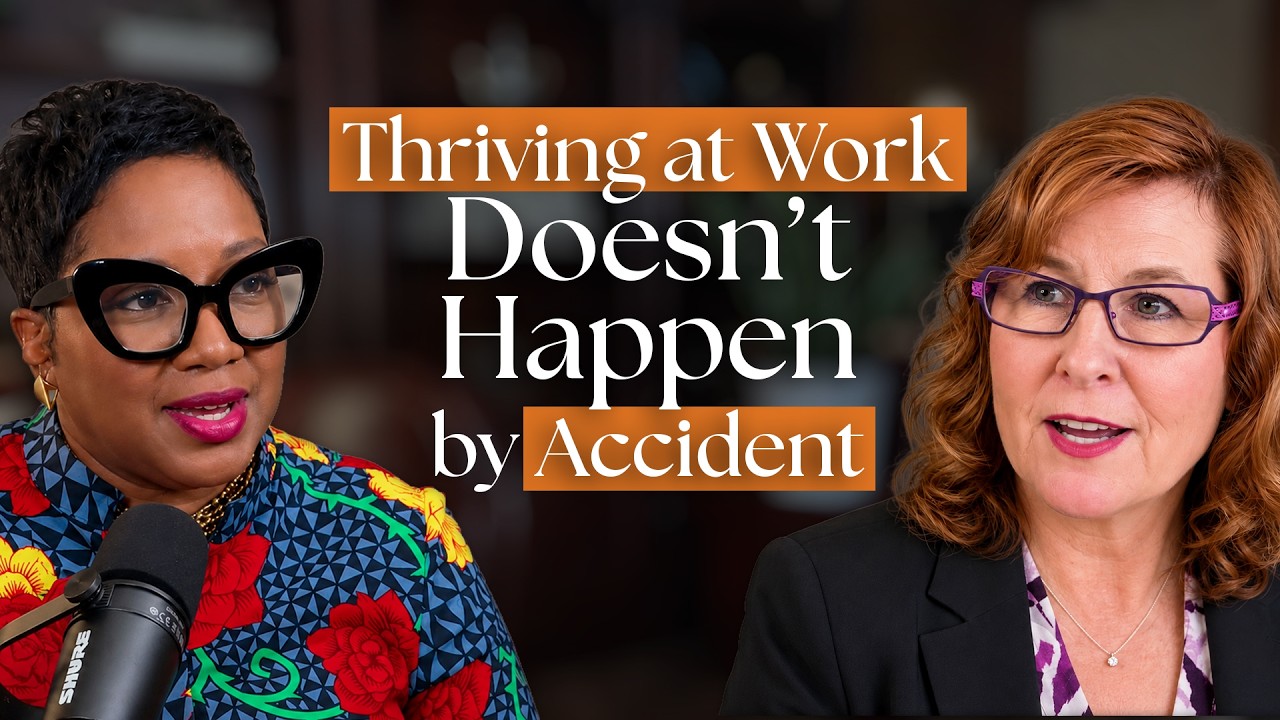
Thriving at Work Doesn’t Happen by Accident
When you speak, your body communicates far more than your words.
Facial expressions, subtle movements, tone, posture, and physiological responses all provide information about what you may be feeling or intending. People can often sense when a message is genuine, and when something feels off, even if they cannot immediately explain why.
That makes human interaction in the workplace much more than a “soft skill.” It is a critical part of how people establish trust, navigate conflict, collaborate, and determine whether an environment feels safe.
In this episode of The SHIFT Forward, Dr. Cindy Pace speaks with Dr. Britt Andreatta, an internationally recognized thought leader on the neuroscience of learning and leadership. Britt is CEO of Brain Aware Training, former Chief Learning Officer at Lynda.com (now LinkedIn Learning), and author of the Wired book series, including Wired to Connect and Wired to Resist.
Together, they examine why thriving at work does not happen by accident. It requires leaders to create an intentional social architecture that allows people to feel seen, heard, safe, and valued.
The Workplace Is Always Sending Signals
Human beings are wired to interpret one another.
We notice facial expressions, changes in vocal tone, body language, energy, and countless other signals. Much of this interpretation happens automatically and outside our conscious awareness.
This is one reason leaders cannot rely exclusively on carefully prepared talking points. A leader may say they are excited about a change, confident in a decision, or happy to welcome employees back into the office. But if their nonverbal communication suggests anxiety or uncertainty, employees may perceive a disconnect.
People are no longer satisfied with “fake it until you make it” leadership. They are looking for authenticity and consistency. They want a leader’s words, actions, and emotional presence to align.
When they do not align, employees may not be able to identify the exact problem, but they can often sense that something is wrong.
Our bodies also contain interconnected systems that contribute to emotional perception and decision-making. The gut-brain axis, for example, connects the brain with the enteric nervous system. That connection helps explain why people sometimes experience intuition as a physical sensation—a feeling in the stomach that something is not right.
Leaders should not treat these human responses as irrelevant or unprofessional. They are part of how people process information, assess risk, and determine whether someone is trustworthy.
Why In-Person Interaction Still Matters
Technology has transformed where and how we work, but human biology has not changed at the same pace.
Virtual platforms provide convenience, accessibility, and flexibility. They allow established teams to exchange information and complete many types of independent work effectively. But a video call also limits the amount of interpersonal information available to participants.
People typically see only a face and the upper part of the body. They miss many of the gestures, movements, and environmental signals that would be present during an in-person conversation.
That distinction becomes especially important when people are:
Forming a new team
Establishing trust
Brainstorming or innovating
Working through conflict
Discussing emotionally sensitive issues
Navigating uncertainty
Co-creating something new
These situations benefit from the richer information people receive when they share a physical space.
This does not mean that in-person work is always superior. It means leaders must stop treating workplace location as a simple on-or-off switch.
The right question is not, “Should everyone work in the office or from home?”
The better question is, “What kind of work are we doing, and where can we do it best?”
Stop Bringing People Into the Office Without a Purpose
Employees quickly recognize when an office mandate lacks intention.
If someone commutes to the office only to spend the day on virtual meetings, the experience feels wasteful. The employee may have been more productive at home without the time, expense, and stress of commuting.
If an organization asks people to work in the office Tuesday through Thursday, leaders should align the work with that schedule.
In-person days could prioritize:
Team formation and relationship building
Collaborative problem-solving
Innovation and brainstorming
Conflict resolution
Coaching and development
Cross-functional conversations
Informal knowledge sharing
Independent tasks, documentation, focused analysis, and virtual meetings may be better suited to remote days.
Hybrid work becomes effective when leaders design it around the work instead of an arbitrary calendar.
The Value of Organic Proximity
Some of the most valuable workplace interactions cannot be scheduled.
You may walk over to a colleague’s desk to discuss an idea, show them a book, ask for advice, or continue a conversation that began in a meeting. These spontaneous exchanges can produce insights that might never emerge from a formal video call.
Proximity also supports the exchange of tacit knowledge: the history, context, and practical wisdom that rarely appear in a manual.
Employees learn through the “meeting before the meeting” and through informal conversations about why a decision was made, what happened during an earlier project, and what they should understand before approaching a particular issue.
Those interactions can support career development as well. Employees may worry that being out of sight will leave them out of mind when leaders select people for important projects, promotions, or development opportunities.
People leaders must address that concern intentionally.
They need to understand each employee’s goals, identify the visibility that would support those goals, and ensure remote or hybrid employees are not inadvertently excluded from opportunities.
Every Workplace Has a Different Context
There is no universal workplace model.
Many industries do not have the option of remote work. Hospitality employees, restaurant workers, healthcare professionals, field technicians, and many others must perform their jobs on-site.
Other organizations operate almost entirely virtually, including some whose executive teams have never shared one central headquarters.
Leadership expectations also vary. Some senior leaders built their careers in environments where daily physical presence was the norm. Their preferences may influence how visibility, commitment, and performance are interpreted.
Employees should understand the environment they are navigating. At the same time, leaders have a responsibility to examine whether their assumptions are based on actual business needs or simply personal familiarity.
The goal should be to design a workplace that supports both the work and the people doing it.
Not Every Workplace Feels Safe to Everyone
Calls to return to the office often come from leaders who have historically felt comfortable and safe there. But employees do not all experience the same workplace in the same way.
During widespread remote work, many women, people of color, LGBTQ+ employees, people with disabilities, caregivers, and others found greater control over their environments. Some experienced fewer informal microaggressions, interruptions, or forms of harassment.
Virtual work did not eliminate every problem, but it sometimes created a protective boundary. Employees could enter a scheduled meeting, contribute, and leave without being exposed to as many difficult informal encounters.
Bringing people back into a building does not automatically produce belonging or collaboration.
Before requiring physical presence, leaders need to ask:
Is this environment psychologically safe?
Is it physically accessible and safe?
Do people experience respect across both formal and informal interactions?
Are microaggressions addressed?
Can employees raise concerns without embarrassment or punishment?
Does everyone have a meaningful opportunity to contribute?
If employees do not feel safe, they will not perform their best work regardless of where they are sitting.
Workplace Design Affects Emotional Regulation
Physical workspaces also influence people’s ability to regulate their emotions.
Traditional private offices allowed employees to close a door, create privacy, and surround themselves with personally meaningful items. Assigned cubicles still provided room for photographs, plants, or objects that created familiarity.
Many organizations later adopted open offices and unassigned workstations. These environments may support some forms of interaction, but they can also remove
Add Your Heading Text Here
Lorem ipsum dolor sit amet, consectetur adipiscing elit. Ut elit tellus, luctus nec ullamcorper mattis, pulvinar dapibus leo.