We Can’t Ignore AI’s Influence on Us

Protecting Human Skills in the Age of AI
Whether you are actively choosing to use artificial intelligence or not, it is already part of your world.
AI recommends what you watch, helps determine what appears in your searches, filters messages, supports workplace software, and increasingly contributes to how people write, communicate, analyze information, and make decisions.
But as human-like as these systems may appear, they remain imperfect tools.
People are training AI, and AI is also training people.
It can help us communicate, generate ideas, prepare for difficult conversations, and work more efficiently. At the same time, its frictionless design may make us less patient, less tolerant of disagreement, and less connected to the people we lead.
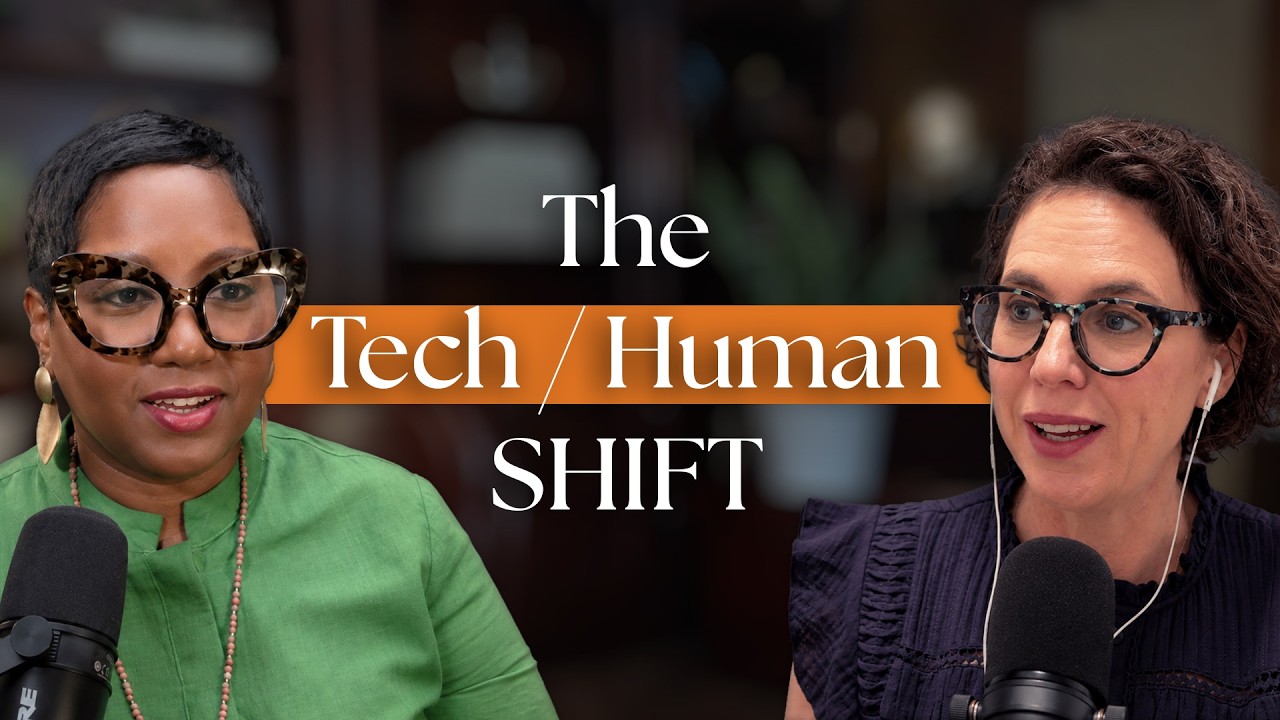
That is the central challenge of the tech-human shift.
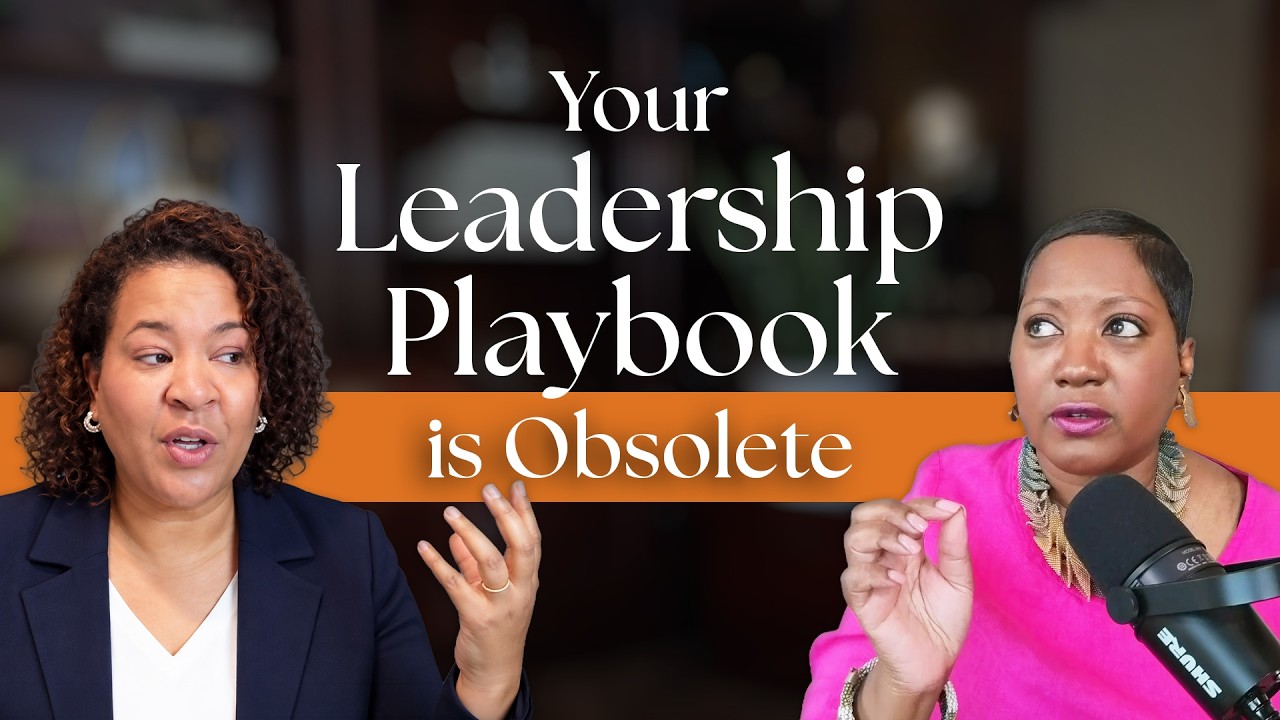
In this episode of The SHIFT Forward, Dr. Cindy Pace speaks with Amy Gallo, author of the bestselling book Getting Along: How to Work with Anyone (Even Difficult People), contributing editor at Harvard Business Review, and an expert on workplace relationships, gender, conflict, and difficult conversations.
Together, they explore how leaders can use AI productively without abandoning authenticity, empathy, judgment, integrity, and human connection.
AI Is Changing More Than How We Work
The effect of AI extends beyond automating tasks.
It is changing how people relate to their own work, how they evaluate their colleagues, and what they expect from everyday interactions.
An AI assistant does not become impatient when you repeat a question. It does not become offended when you reject its answer. You can interrupt it, correct it, close the application, or completely change its instructions.
Human relationships do not work that way.
People misunderstand one another. They bring different assumptions, priorities, emotions, histories, and communication styles into a conversation. They sometimes disagree, fail to respond as expected, or challenge an idea we believe is excellent.
That friction can feel inefficient compared with an AI system designed to accommodate the user.
But human messiness is not a defect to eliminate. It is often where creativity, trust, growth, and breakthroughs begin.
Authenticity in AI-Assisted Communication
Suppose you use AI to write an email to a colleague.
You may edit the result extensively, make a few changes, or send it exactly as generated. That raises a new question: Who actually wrote the message?
The issue is not whether using AI is automatically wrong. The issue is whether the communication honestly represents your judgment, intention, and voice.
Research and workplace surveys indicate that some people feel inauthentic—or as though they are cheating—when they rely on AI. Employees may also hesitate to disclose their use because they fear others will see them as less competent, less hardworking, or less intelligent.
Those perceptions create a new layer of uncertainty in workplace relationships.
Leaders and teams need norms that address questions such as:
-
When should AI assistance be disclosed?
-
How much human review is required?
-
Who is responsible for errors?
-
What types of information may be entered into an AI system?
-
When must content reflect the author’s personal voice?
-
How should AI-generated research or claims be verified?
-
Which decisions require entirely human judgment?
-
What does responsible attribution look like?
These questions cannot remain implicit. Organizations need open conversations about them.
Disclosure Can Strengthen Trust
AI disclosure does not need to sound apologetic.
A person might simply say:
-
“I used AI to create the first draft and then revised it.”
-
“AI helped generate these interview questions.”
-
“I used an AI tool to organize the data in this report.”
-
“This presentation was AI-assisted, so please flag anything that seems inaccurate.”
-
“The initial language came from an AI tool, but the conclusions and recommendations are mine.”
This kind of transparency helps colleagues interpret the work appropriately.
Amy shared an example of preparing for a video interview with a longtime collaborator. He disclosed that AI had helped him develop the questions. When she encountered a question that did not sound like him and seemed unrelated, she did not question his judgment or preparation. She understood how the inconsistency had entered the process and could address it directly.
Disclosure can also create opportunities for learning.
If a colleague produces an outstanding report and explains that AI supported the work, the conversation can shift from suspicion to curiosity:
“How did you use it? What prompts worked? What did you change? How did you verify the result?”
Responsible disclosure can turn AI use into a point of human connection.
Using AI With Integrity
Authenticity is closely connected to integrity.
Using AI with integrity means being truthful about how a work product was developed, reviewing what the technology produces, and accepting responsibility for the final result.
AI should not become a convenient way to disguise borrowed thinking as original insight.
Responsible users should ask:
-
Is this actually my point of view?
-
Do I understand and agree with the argument?
-
Did the system introduce assumptions I have not examined?
-
Are the facts and sources accurate?
-
Does this sound like me?
-
Have I removed language I would not personally use?
-
Am I willing to take responsibility for this?
-
Should I disclose how AI contributed?
The standards are similar to those used in research and professional writing. People must distinguish between what someone else established, what a tool generated, and what represents their own interpretation.
The final work should still reflect human judgment.
AI and the Workplace Trust Crisis
AI use may affect how colleagues perceive one another.
Some people interpret AI assistance as evidence that a colleague took a shortcut. They may assume the person is lazy, incapable, or less knowledgeable than they appeared.
These judgments may be unfair, especially when the technology allows someone to do higher-quality work. But leaders cannot simply ignore the perceptions because they disagree with them.
They need to recognize the trust problem and address it.
Trust is often associated with qualities such as:
-
Authenticity
-
Empathy
-
Integrity
-
Competence
-
Benevolence
-
Sound reasoning
AI can potentially weaken perceptions of several of these qualities.
An AI-generated message may not feel authentic. A difficult communication written by a machine may appear to lack empathy. An inaccurate report can raise questions about competence. Hidden AI use can create doubts about integrity.
Leaders should consider how AI might affect every part of the trust relationship, not only whether it improves efficiency.
Frictionless Technology Can Reduce Our Patience
Many AI systems are designed to create smooth, agreeable experiences.
They quickly generate alternatives, accept correction without resistance, and often respond in a validating or encouraging tone. If users dislike an answer, they can simply ask again or alter the instructions.
This creates a risk: The easier it becomes to interact with machines, the more annoying ordinary human interaction may feel.
Some employees already report wishing they could work exclusively with AI agents because human colleagues seem difficult by comparison.
But friction plays an essential role in human work.
When colleagues misunderstand each other, they have an opportunity to clarify their intentions and assumptions. That process can create a deeper understanding than if no misunderstanding had occurred.
One person might say, “That isn’t what I meant.”
The other responds, “Here is what I thought I heard and why.”
Both people now know more about how the other thinks. They have a chance to build a stronger relationship.
AI can simulate disagreement, but it cannot reproduce the full relational experience of two people recognizing tension, sitting with discomfort, repairing a misunderstanding, and building trust through the process.
Do Not Confuse Validation With Good Thinking
AI systems can sound extremely supportive.
They may describe an ordinary idea as insightful, brilliant, or strategically strong. That validation can feel good, but it does not necessarily improve the work.
If leaders repeatedly interact with systems that affirm them, they may become less prepared for colleagues who challenge their reasoning.
One way to counteract this tendency is to assign AI an adversarial role.
For example, ask it to:
-
Act as a skeptical executive reviewing your proposal
-
Identify the weakest parts of your argument
-
Develop the strongest case against your recommendation
-
Ask questions an experienced critic would raise
-
Review your presentation as a demanding editor
-
Find assumptions unsupported by evidence
-
Write a one-star review of your draft
-
Identify how different stakeholders might react
-
Explain why your plan could fail
This can help leaders prepare for perspectives beyond their own.
However, even an adversarial AI is still following the user’s instructions. Human beings remain more unpredictable. A colleague may notice an issue you never thought to ask the machine to examine.
Unexpected human responses are often where the most valuable learning occurs.
Remember That AI Is Designed to Hold Your Attention
AI tools are products.
Their creators generally benefit when people use them frequently, integrate them deeply into their work, and rely on them for more activities.
That does not make the tools inherently harmful. It means users should understand the incentives behind their design.
The system’s default behavior may serve the company that created it, not necessarily the person using it.
Leaders should teach employees to examine:
-
Why the tool responds the way it does
-
What information it collects
-
Whether it encourages dependence
-
What commercial incentives shape the experience
-
Which perspectives may be missing
-
How confidently it presents uncertain information
-
Whether it favors speed over quality or nuance
AI literacy requires more than knowing how to write an effective prompt. It requires understanding how the tool may influence the user.
“This Is a Machine, Not a Human”
The human-like qualities of AI can make it easy to anthropomorphize.
People give their agents names, speak to them as companions, and describe them as colleagues. Yet an AI system does not experience hurt, embarrassment, fear, or disrespect in the way a person does.
Users can speak rudely, cut off an exchange, or close the application without consequences for the machine.
That may gradually influence how people communicate elsewhere.
Amy described intentionally reminding herself, “This is a machine, not a human.” She stopped giving her agents human names because she did not want to blur the distinction.
The purpose is not to promote rudeness toward technology. It is to prevent the habits permitted by machine interaction from transferring into human relationships.
A colleague cannot be reprogrammed when they disagree. A team member may remember an impatient comment. A person may feel dismissed when interrupted or abandoned when someone walks away.
Human beings require consideration, patience, repair, and mutual respect.
AI Can Help Prepare for Difficult Conversations
The concerns surrounding AI do not erase its benefits.
One particularly valuable use is preparing for a difficult conversation.
A leader can use AI to:
-
Organize the points they need to address
-
Test different ways of phrasing feedback
-
Anticipate how the other person might react
-
Identify language that sounds accusatory
-
Separate observations from assumptions
-
Practice responses to likely objections
-
Create a respectful opening
-
Plan follow-up questions
-
Soften an overly abrupt email
-
Ensure the message focuses on behavior rather than identity
The value comes from the preparation, not from blindly reading an AI-generated script.
People can tell when someone has carefully considered a difficult message. They can also tell when a leader is improvising, rushing through the feedback, or trying to escape the conversation.
Preparation communicates care.
Feedback Should Preserve Dignity and Agency
Receiving feedback can trigger several kinds of discomfort.
First, feedback can challenge identity. Someone who believes they are an excellent manager may hear criticism as evidence that they are not.
Second, it can threaten the relationship. The recipient may wonder, “I thought this person respected me. Do they dislike me?”
Third, it can trigger a disagreement about truth. The recipient may believe the feedback is inaccurate or based on a misunderstanding.
A skilled leader anticipates these reactions.
One useful technique is contrasting—clarifying what the feedback is and is not about.
For example:
“This is not a judgment of you as a person or of your overall value to the team. I want to discuss one specific interaction because I believe addressing it will help you become even more effective.”
Or:
“Our relationship is not at stake. I value working with you. I’m raising this because the conversation we had two weeks ago is still affecting the team, and I want us to resolve it.”
That distinction helps the recipient understand what is truly being discussed.
Leaders should also give people time to process, check whether the message was understood, invite their perspective, and return to the conversation later.
Difficult feedback should not be a drive-by event.
Trust Determines How Feedback Is Received
The same feedback can produce very different reactions depending on the relationship.
Dr. Pace recalled a senior leader at Pfizer who pushed her beyond her comfort zone. Before an important presentation, Cindy initially sat in chairs behind the main conference table because she did not consider herself part of the senior leadership meeting.
Her manager immediately motioned for her to move to the table.
Afterward, the manager told her:
“I never want to see you sitting on the sidelines again. I invited you to this meeting because people need to hear your ideas. Don’t become so focused on hierarchy that you forget the value you’re bringing.”
The feedback was direct. But Cindy understood that the leader was invested in her success.
She reframed the manager as a coach pulling a player aside during a game: Here is what you need to change. Now get back in and play.
Years of trust changed how the message landed.
AI might help a leader develop a feedback script, but it cannot independently create the relationship that makes difficult feedback credible.
Situational Awareness Remains Distinctly Human
As AI performs more cognitive tasks, people frequently ask which human capabilities deserve continued investment.
Situational awareness belongs near the top of that list.
A transcript can capture words, but it does not fully capture:
-
Body language
-
Eye contact
-
Silence
-
Shifts in energy
-
Facial expressions
-
Who appears uncomfortable
-
Which person wants to speak
-
Whether a question is curious or hostile
-
How status influences the exchange
-
Whether the group feels relieved, confused, or defensive
Human beings interpret these signals in context.
If someone asks, “How do you know that?” the words alone do not reveal whether the person is skeptical, interested, angry, playful, or inviting greater detail.
AI can analyze patterns and provide recommendations, but the people in the room possess information unavailable in a written transcript.
Leaders need to strengthen their ability to read the room, interpret context, and adjust in real time.
Do Not Remove the Challenging Parts of Being Human
Technology increasingly removes human interaction from everyday life.
People can order groceries, request transportation, book services, and complete transactions without speaking to anyone.
That convenience is valuable. But if every inconvenience and disagreement is designed away, people may lose practice with the relational skills required for collective work.
Conflict has benefits when it is approached with kindness, intention, and respect.
It can expose hidden assumptions, identify risks, improve decisions, and generate more creative solutions. The goal should not be to eliminate conflict but to navigate it productively.
The future of work needs people who can remain human during tension—not people who can avoid it entirely.
The Gender Gap in AI Adoption
AI adoption does not occur on a level playing field.
Research and workplace observations suggest that women may adopt workplace AI tools at lower rates than men. One contributing factor may be the unequal consequences of failure.
Women and members of other underrepresented groups are often penalized more harshly for mistakes. When AI tools remain imperfect and can generate inaccurate or low-quality work, using them may feel professionally risky.
An organization might publicly encourage experimentation and “failing fast” while its actual culture punishes some employees more than others.
Leaders should not dismiss this hesitation as resistance to technology.
They should ask:
-
Who feels safe experimenting?
-
Who receives forgiveness when an experiment fails?
-
Whose mistakes are treated as evidence of personal incompetence?
-
Who has access to informal guidance?
-
Who is expected to produce flawless work before sharing it?
-
Are AI-related risks distributed fairly?
-
Do employees have protected spaces in which to learn?
A declared culture of experimentation means little if people experience unequal consequences.
Learn AI in Trusted Communities
One way to reduce adoption gaps is to create trusted learning communities.
Small groups can openly discuss:
-
How they use AI
-
What has worked
-
What has failed
-
Which tools are appropriate for particular tasks
-
How they verify information
-
How they protect confidential data
-
How they disclose AI assistance
-
What concerns they have
-
How AI is changing their profession
Learning in community creates support and reduces the pressure to appear instantly expert.
Participants can compare practices, examine mistakes, and discover safeguards. Someone concerned about inaccurate information might learn to verify the output through another source or tool rather than assuming the first response is reliable.
These communities should include trusted peers and opportunities to learn from people with different backgrounds, disciplines, and perspectives.
AI Can Help More People Become Creators
The tech-human shift also creates significant opportunities.
Dr. Pace described preparing a presentation for the Global Summit of Women in Istanbul. Her topic was how podcasting can help women become recognized voices of authority and strengthen their thought leadership.
Women are often enthusiastic podcast listeners, yet they remain underrepresented as creators and hosts in business, management, and technology categories.
AI helped her think beyond a conventional presentation about communication. It enabled her to recognize that she was making a broader argument about advocacy and representation.
Technology can reduce barriers to entry by helping people:
-
Develop ideas
-
Organize research
-
Outline episodes
-
Prepare interview questions
-
Refine descriptions
-
Practice presentations
-
Generate conversation starters
-
Translate or adapt content
-
Build confidence before speaking publicly
The goal is not to let AI replace a person’s voice. It is to help more people discover and amplify their own.
Establish Team Norms for AI
People leaders should initiate explicit conversations about AI use rather than waiting for confusion or conflict.
A team agreement might address:
-
Appropriate and prohibited uses
-
Disclosure expectations
-
Privacy and confidential information
-
Fact-checking and human review
-
Ownership of the final product
-
Attribution and sourcing
-
Acceptable experimentation
-
How mistakes will be handled
-
When human interaction is required
-
How to prevent AI from replacing necessary collaboration
These conversations should remain open because technology and workplace expectations will continue changing.
Leaders do not need to arrive with every answer. They need to create a space where the team can develop responsible practices together.
Make Room for Productive Friction
Teams should also establish norms for disagreement.
A leader can say:
“Disagreement is a normal and inevitable part of working with other people. Our goal is not to eliminate it. Our goal is to navigate it together in service of better decisions, stronger relationships, and excellent work.”
That message must be supported by behavior.
If a leader claims to value disagreement but becomes visibly angry, shuts down, or quickly changes the subject whenever someone challenges an idea, the team will believe the behavior rather than the statement.
Leaders must examine their own relationship with conflict and model the openness they request from others.
One Phrase That Can Shift a Difficult Conversation
During a difficult meeting about ending a beloved project, the most junior person in the room said:
“This is a really tough conversation, and I’m really glad we’re having it.”
The statement changed the meeting’s energy.
It acknowledged the discomfort without trying to erase it. It reminded everyone that the conversation had a purpose and that the group could work through the tension together.
Leaders can use the same phrase when teams disagree about AI, remote work, organizational policy, restructuring, or any other difficult issue:
“This is a tough conversation, and I’m really glad we’re having it.”
It is okay not to see eye to eye. It is okay not to have an immediate answer. It is okay to remain in the discomfort long enough to understand the issue.
What the Tech-Human Shift Requires
The tech-human shift represents both a collision and an integration of advanced technology with essential human experience.
Technology is no longer simply a tool. It is reshaping judgment, creativity, communication, identity, relevance, and team composition.
Teams may increasingly include both humans and AI agents. People will train those agents, and the agents will influence how people think and behave.
Leaders therefore need to develop three distinctly human qualities:
Authenticity: Make sure your work reflects your actual voice, judgment, and values. Be honest about how AI contributed.
Authority: Strengthen your expertise and point of view. Do not mistake a confidently written AI response for accurate or original thinking.
Agency: Choose how you use technology. Do not allow convenience, default settings, or algorithmic incentives to determine how you lead and relate to others.
The leaders who thrive will not necessarily be the ones who use AI most often. They will be the ones who use it deliberately while protecting the human capabilities their organizations need.
The Question Leaders Must Keep Asking
AI makes choices based on the information, instructions, and patterns available to it. Those choices reflect a point of view, even when the system presents its answer as neutral.
Every time AI helps craft a communication, complete research, or develop an argument, leaders should ask:
-
What perspective is being presented?
-
Which assumptions shaped it?
-
What might be missing?
-
Does this represent my thinking?
-
Is this a borrowed point of view?
-
Am I being truthful about how the work was created?
The final question is simple:
Is this actually my point of view?
Make sure it is.
Human skills in the age of AI are not secondary to technological progress. They are what allow us to use technology without surrendering judgment, integrity, creativity, trust, or connection.
The opportunity is not to choose between technology and humanity.
It is to make technology work for humanity.
Add Your Heading Text Here
Lorem ipsum dolor sit amet, consectetur adipiscing elit. Ut elit tellus, luctus nec ullamcorper mattis, pulvinar dapibus leo.