Your Culture is Talking. Are You Listening?

Why Leaders Must Treat Culture as Their Most Important Job
Have you ever hired an extraordinarily talented person only to watch them struggle within your organization?
The problem may not have been their ability. It may have been the culture surrounding them.
Culture is the governing operating system of humanity. It shapes how people interpret the world, determine what matters, interact with one another, and decide how to behave.
The better leaders understand culture, the more effectively they can engage people and unlock both individual and collective potential.
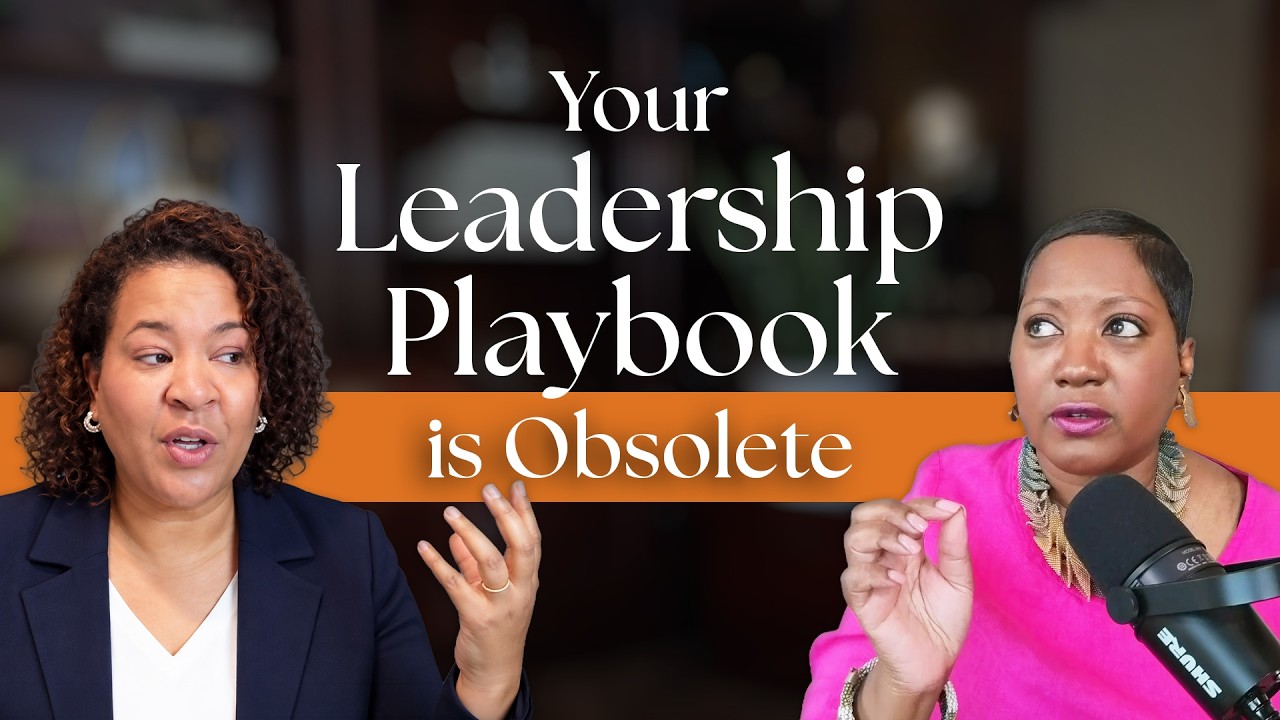
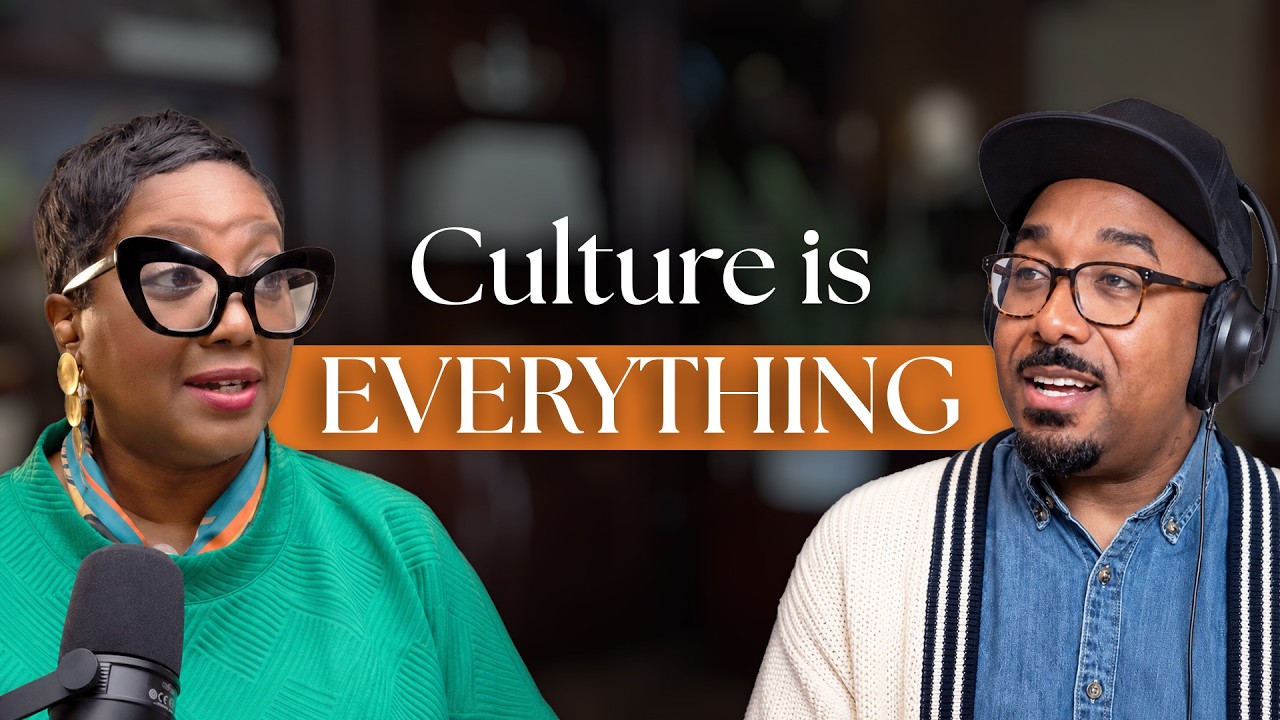
In this episode of The SHIFT Forward, Dr. Cindy Pace speaks with Dr. Marcus Collins, an award-winning marketer and professor at the University of Michigan’s Ross School of Business. Marcus is also a recipient of the Thinkers50 Radar Award for the idea most likely to shape the future of business and management.
His forthcoming book, Good Soil, explores how culture helps people, teams, and companies flourish.
Together, Cindy and Marcus examine why culture is everything—and why leaders cannot afford to leave it to chance.
The Front Stage Is Only as Strong as the Backstage
Much of Marcus Collins’s career has focused on culture as a mechanism for consumption.
As a marketer and scholar, he has studied why people buy particular products, wear particular clothing, adopt certain behaviors, and organize themselves around shared identities.
That work traditionally focused on an organization’s front stage: how brands use culture to connect with audiences.
But the front stage is only as effective as the backstage.
A production may have gifted actors, beautiful costumes, exceptional props, a strong script, and a talented director. None of that guarantees success if the backstage is disorganized and operating below its potential.
The same is true for an organization.
A company may have:
A celebrated brand
Outstanding products
Sophisticated marketing
Exceptional individual talent
Impressive technology
Significant financial resources
An inspiring strategy
But if its internal culture does not support the people doing the work, those assets will never reach their full potential.
An organization’s external promise cannot remain credible when its internal experience contradicts it.
Why Great Talent Sometimes Fails
People often assume that an employee who succeeded in one organization should produce the same results somewhere else.
That assumption ignores culture.
An employee’s performance does not result from ability alone. Performance also depends on the surrounding environment, including:
How decisions are made
What behavior receives recognition
How conflict is handled
Who has influence
Whether employees can speak honestly
How information moves
What leaders genuinely value
Whether people feel safe taking risks
How success is defined
What the organization believes
A talented person may thrive in a workplace that prizes experimentation and struggle in one that punishes mistakes.
Someone who succeeds in a highly collaborative environment may become frustrated in a culture built around individual competition.
A disruptive thinker may be enthusiastically recruited for their willingness to challenge convention, only to discover that the organization does not actually tolerate dissent.
Culture helps explain why assembling a group of exceptional individuals does not automatically produce an exceptional team.
What Is Organizational Culture?
Ask five people to define organizational culture, and you may receive 55 answers.
The most common definition is:
“Culture is how we do things around here.”
That definition is useful because it directs attention toward behavior. If leaders want to improve culture, they can examine how people currently operate and decide what needs to change.
But behavior alone does not tell the whole story.
Culture includes both thinking and doing. It is composed of shared beliefs that produce shared behavior.
Marcus describes this relationship as shared cognition creating shared kinetics.
People act together because they share an understanding of how the world works, what matters, and why particular actions make sense.
Throughout human history, shared stories and belief systems have allowed people to coordinate, specialize, create institutions, and maintain social solidarity.
The same mechanism is active inside organizations today.
Beliefs Come Before Values
Organizations devote enormous energy to identifying and publishing values.
The result may be a polished list of words such as:
Integrity
Innovation
Collaboration
Excellence
Courage
Inclusion
Customer focus
Those values may appear on office walls, presentation slides, websites, recruitment materials, and employee handbooks.
But values without underlying beliefs are hollow.
Values describe what an organization considers important. Beliefs describe what the organization accepts as true.
Beliefs drive behavior.
An organization might say it values innovation. But if its underlying belief is that mistakes damage credibility, employees will avoid experimentation.
A company might list collaboration as a value. But if it believes individual competition produces the best results, employees will hoard information and credit.
A leader might promote inclusion while believing that only a small group of established insiders can make reliable decisions.
The written value cannot overcome the operative belief.
Leaders must therefore begin by asking:
What do we believe?
How do we see the world?
What do we believe about people?
What do we believe about leadership?
What do we believe creates excellent work?
What do we believe about risk and failure?
What do we believe customers need?
What do we believe our responsibility is?
Why does this organization exist?
Values can then become a bridge between those beliefs and the behaviors employees demonstrate.
The Culture Say–Do Gap
Many organizations experience a gap between the culture they describe and the culture employees experience.
They say they want innovation but punish people who challenge established practices.
They say they value transparency but withhold important information.
They say they welcome different perspectives but reward conformity.
They say employees should take risks but react harshly when an experiment fails.
They say people are their greatest asset but make decisions that treat them as easily replaceable.
This is the culture say–do gap.
A company may sincerely aspire to a different culture, but aspiration does not equal reality.
Leaders need to confront three questions:
Who are we today?
Who do we want to become?
What is the distance between those two realities?
That distance may be larger than leaders are willing or able to address immediately. Honest organizations acknowledge that.
They can choose to move incrementally rather than pretending that the desired culture already exists.
Beliefs Act as a Compass
Leaders often attempt to navigate change using a detailed map.
A map provides exact instructions: turn left, continue straight, and follow a predetermined route.
But maps become less useful when disruption changes the road.
New technology, competitors, customer expectations, regulations, economic conditions, and workforce needs can make an established route obsolete.
A compass operates differently.
It continues pointing north even when the traveler must take an unexpected detour.
Shared organizational beliefs serve as that compass. Specific processes may change, but the beliefs provide continuity and direction.
The organization can adjust how it operates without losing sight of why it exists or what it stands for.
In an era of relentless disruption, leaders need that kind of grounding.
Leaders Shape Culture at Every Level
Large organizations contain many cultures.
There is a broad organizational culture, but there are also team, departmental, regional, professional, and functional microcultures.
An engineering team may work differently from the marketing team. Finance may have different rituals and habits from research and development. Regional offices may interpret the company’s expectations differently.
That variation is not inherently a problem.
Healthy subcultures can adapt broad organizational beliefs to their unique work. They give teams room to develop practices that make sense in context.
The danger appears when a subculture becomes a counterculture.
A counterculture does not merely operate differently. It defines itself in opposition to the larger organization. Its stance becomes “us versus them.”
That adversarial identity can fracture trust, coordination, and shared purpose.
People leaders cannot abdicate responsibility for culture by assuming that corporate values will automatically flow down to every team.
They must translate the organization’s beliefs into the daily reality of the people they lead.
Leadership Is Influence Through Inspiration
At the University of Michigan’s Ross School of Business, leadership is described as the ability to influence people without relying on authority.
Influence cannot depend exclusively on hierarchy or coercion.
Leaders inspire people by communicating what the organization believes and why its work matters.
That message extends beyond:
What the company does
What products it makes
What services it provides
How its processes work
It addresses why the organization exists and the view of the world that gives its work meaning.
People who share that belief are more likely to say, “Yes—this is something I want to contribute to.”
People who do not share it may remain only for the paycheck. They can still possess tremendous talent, but they may never feel genuine commitment to the organization’s purpose.
A strong culture makes its beliefs clear enough that people can decide whether they truly belong.
Culture Should Unite Rather Than Erase Difference
Shared beliefs do not require everyone to think, behave, or contribute identically.
A healthy organizational culture creates unity across differences.
People may bring different:
Identities
Professional disciplines
Experiences
Communication styles
Opinions
Skills
Cultural backgrounds
Ways of solving problems
The shared belief system gives those differences direction without eliminating them.
A basketball team offers a useful analogy.
The core objective of the game remains the same: score more points than the opponent by putting the ball through the hoop.
But the style of play changes.
Basketball once emphasized dominant centers and scoring close to the basket. Players such as Stephen Curry helped transform the game by demonstrating the strategic power of three-point shooting. Today, even many centers are expected to shoot from long range.
The method changed. The central objective did not.
Organizations also need the freedom to change how they work while remaining grounded in what they believe and why they exist.
Culture Travels With People
When employees leave a great culture, its influence does not necessarily end.
People carry lessons, expectations, relationships, rituals, and leadership practices into their next organizations.
A former employee can become:
An advocate
A customer
A referral source
A business partner
A future employee
A recruiter of aligned talent
An ambassador for the organization’s reputation
This is why great workplaces matter beyond the boundaries of one company.
They improve how people lead elsewhere. They affect communities, livelihoods, and economies at scale.
Organizations increasingly recognize this by maintaining alumni communities. Former employees remain connected because their experience and belief in the organization continue to matter.
Some eventually return as “boomerang employees,” bringing new knowledge and experiences with them.
The way people leave is therefore an important expression of culture.
Rituals Make Beliefs Visible
Marcus shared an example from his time as Chief Strategy Officer at the advertising agency Wieden+Kennedy.
When an employee left the New York office, colleagues gathered near the elevators. The departing person walked down the office’s iconic stairs while everyone applauded.
The ritual communicated gratitude:
“Thank you for your service. Thank you for what you contributed.”
It also expressed an organizational belief that employees should do the best work of their lives while they are there.
The applause acknowledged not only results, but also the time, effort, creativity, and sacrifice the person contributed.
Rituals make culture tangible.
They transform beliefs from abstract ideas into experiences people can see, feel, and remember.
Leaders should examine which rituals currently exist and what those rituals communicate.
Mattering Is a Cultural Requirement
People need to know their work mattered.
They want to see how their effort contributed to the team, organization, customer, or community. They want evidence that the time and energy they invested were not meaningless.
Mattering is different from generic recognition.
It answers deeper questions:
Did my work make a difference?
Did anyone notice my contribution?
Did I help someone?
Did I shape an outcome?
Was my time valued?
Would anything be different if I had not been here?
Leaders create mattering by connecting individual contributions to a broader purpose.
When people understand that connection, they are more likely to contribute discretionary effort—not because they are forced to, but because they care about the work and their role in it.
Do Not Leave Culture to Chance
Every organization has a culture, whether leaders design it intentionally or not.
The question is not whether culture exists. The question is whether the existing culture supports what the organization is trying to accomplish.
Leaders should intentionally examine:
What people believe
Which behaviors receive rewards
Which behaviors go unchallenged
How employees describe the organization
What customers experience
What former employees say
Who succeeds and why
Who struggles and why
What people learn during onboarding
What stories employees repeatedly tell
Internal perception is not enough.
Organizations also need external information. They should understand how candidates, customers, former employees, partners, and the broader market perceive them.
A company may describe itself as innovative while outsiders view it as slow. Leaders may believe the culture is inclusive while employees describe it as exclusive.
Without outside data, organizations risk telling themselves an incomplete story.
Culture Influences Talent and Brand
Culture is not separate from brand.
What employees experience backstage eventually affects what customers experience on the front stage.
A misaligned backstage can undermine even the most compelling external promise.
Conversely, a strong internal culture can improve:
Product quality
Customer relationships
Innovation
Reputation
Talent attraction
Retention
Referrals
Collaboration
Decision-making
Organizational resilience
Employees who believe in the organization can become powerful advocates. They attract people who are more likely to fit the culture because they understand both the organization and the candidate.
This can strengthen the talent pipeline and reduce some of the uncertainty involved in hiring.
AI Should Extend Humanity, Not Replace It
Technology theorist Marshall McLuhan described technology as an extension of human capability.
The wheel extends the foot. Clothing extends the skin. Glasses extend the eyes. Cameras extend memory. Computers extend aspects of the brain.
From that perspective, AI should extend human capability—not attempt to become human for us.
The power of people is not limited to productivity.
People contribute:
Perspective
Lived experience
Meaning
Judgment
Imagination
Context
Relationships
Interpretation
Moral reasoning
Creativity
The alchemy that occurs when people bring those qualities together cannot be reduced entirely to code.
Organizations should use AI to help people work more effectively, not as an excuse to disregard the human value that makes the work meaningful.
Artificial Diligence, Not Artificial Humanity
The term “artificial intelligence” may encourage people to expect too much from technology.
An alternative framing is artificial diligence.
AI can perform time-consuming activities such as:
Locating potentially relevant research
Organizing large amounts of information
Identifying patterns
Producing preliminary summaries
Comparing documents
Automating repetitive tasks
Suggesting areas for further investigation
That support can dramatically extend human capability.
But the person remains responsible for reading, learning, interpreting, connecting ideas, and creating meaning.
AI can identify papers that may be relevant to a research question. It cannot replace the scholar’s lived experience, interdisciplinary understanding, or unique interpretation.
The tool extends the human. It should not erase the human from the process.
See People Beyond Their Boxes
Organizations often reduce people to the boxes on an organizational chart.
Marketing uses demographic categories. Companies use titles, departments, levels, and functions. These classifications can be useful, but they never capture the full person.
Human beings are intersectional and complex.
They bring capabilities, experiences, identities, interests, and ideas that may not appear in their job descriptions.
When leaders see only the organizational box, they limit what the person is invited to contribute.
When people believe the work is meaningful and feel recognized as full human beings, they offer more of themselves. They bring insights and abilities that the formal role may never have requested.
That is how organizations unlock potential.
Culture Creates Alignment Between the Front and Back Stages
The goal is to create zero distance between what an organization promises externally and what it practices internally.
Customers should not encounter a brand promise that employees themselves do not experience.
When beliefs, behaviors, systems, people, leadership, and brand align, the front stage and backstage reinforce one another.
That is when organizational magic becomes possible.
Culture Is a Leader’s Number-One Job
A leader’s most important responsibility is culture.
Culture is how the work gets done. It influences whether people offer ideas, take responsibility, support one another, persist through difficulty, and contribute beyond the minimum requirements of a job.
Leaders also “bring the weather.”
Their emotional presence and behavior influence how the people around them respond. A leader’s consistency, openness, priorities, and reactions become signals about what is safe, valuable, and expected.
Culture therefore cannot be an afterthought or an annual initiative.
Leaders must create and sustain the conditions in which people can perform, care about their work, and understand how their contributions shape the team.
How to Close a Culture Say–Do Gap
Closing the culture say–do gap begins with the leader.
Ask:
Am I doing what I say matters?
Does my behavior demonstrate our stated beliefs?
Do my decisions reinforce or contradict our values?
What happens when someone violates a team norm?
Can employees safely call out inconsistencies?
Do we correct gaps or ignore them?
Culture is also co-created.
Teams should discuss and define:
What they believe
How they want to work together
What behavior is acceptable
What behavior is unacceptable
How they will address conflict
How they will hold one another accountable
What excellent work looks like
How they will repair broken commitments
If a team says timely delivery matters, it needs processes that reinforce timely delivery. When deadlines are missed, the team should examine what happened and rectify the problem.
Without accountability, stated norms become another form of empty language.
The Shift Forward
Culture is everything because it influences every dimension of social and organizational life.
It determines how people behave, what they believe is possible, whether they experience meaning, and how effectively they work together.
Leaders cannot control every element of a complex organization. But they continually shape culture through what they say, do, reward, tolerate, and model.
The work begins with shared beliefs.
What do we believe? Why do we exist? Who are we today? Who do we want to become? What behavior would make those beliefs visible?
Answering those questions gives people a north star.
Processes will change. Strategies will evolve. Technology will disrupt established ways of working. Teams will reorganize, and new challenges will emerge.
A culture grounded in meaningful shared beliefs can adapt without losing its direction.
Culture should never be left to chance.
It is the leader’s number-one job—and the foundation on which people, teams, and organizations flourish.
Add Your Heading Text Here
Lorem ipsum dolor sit amet, consectetur adipiscing elit. Ut elit tellus, luctus nec ullamcorper mattis, pulvinar dapibus leo.