Why Great Leaders Prioritize Connection

Why Connection Is a Leadership Imperative
Being in the same room does not mean people are truly connected.
Neither does joining the same video call, exchanging information, or moving efficiently through an agenda.
Communication can be one-directional. Connection requires reciprocity.
It happens when people feel seen, heard, understood, and invited to contribute. In an era of relentless disruption, creating that experience is no longer optional for leaders. It is a business and human imperative.
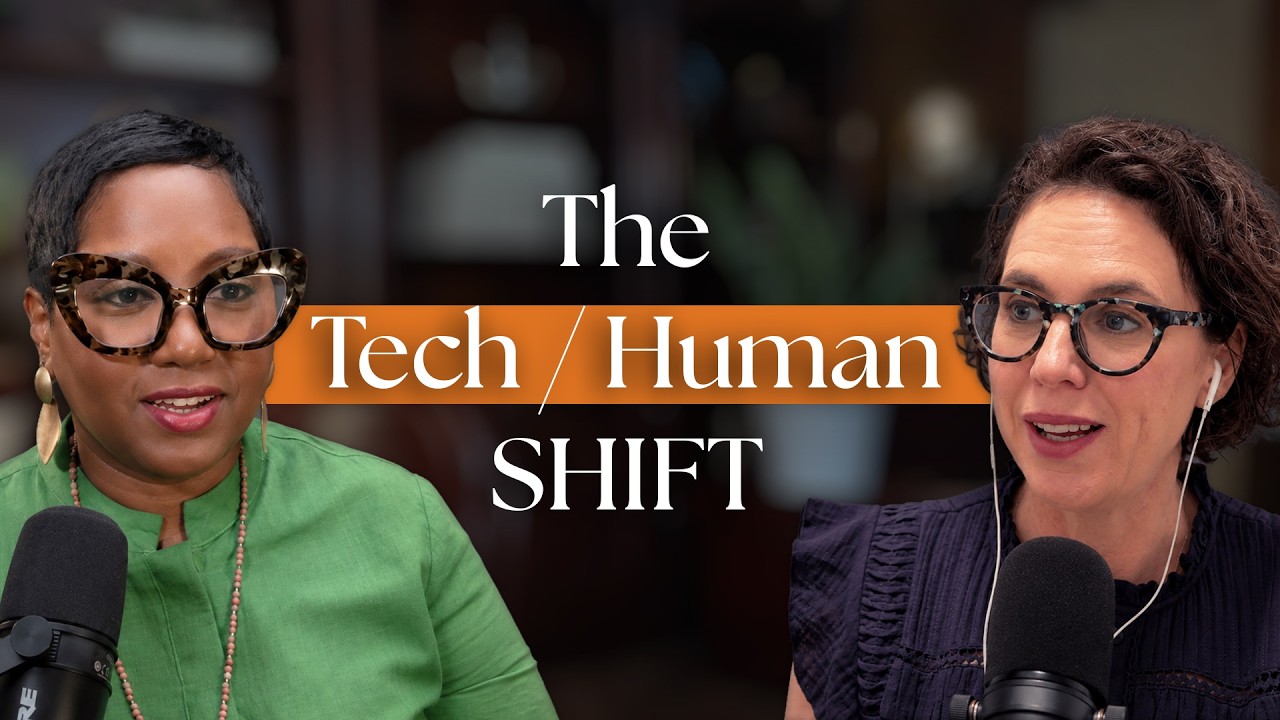
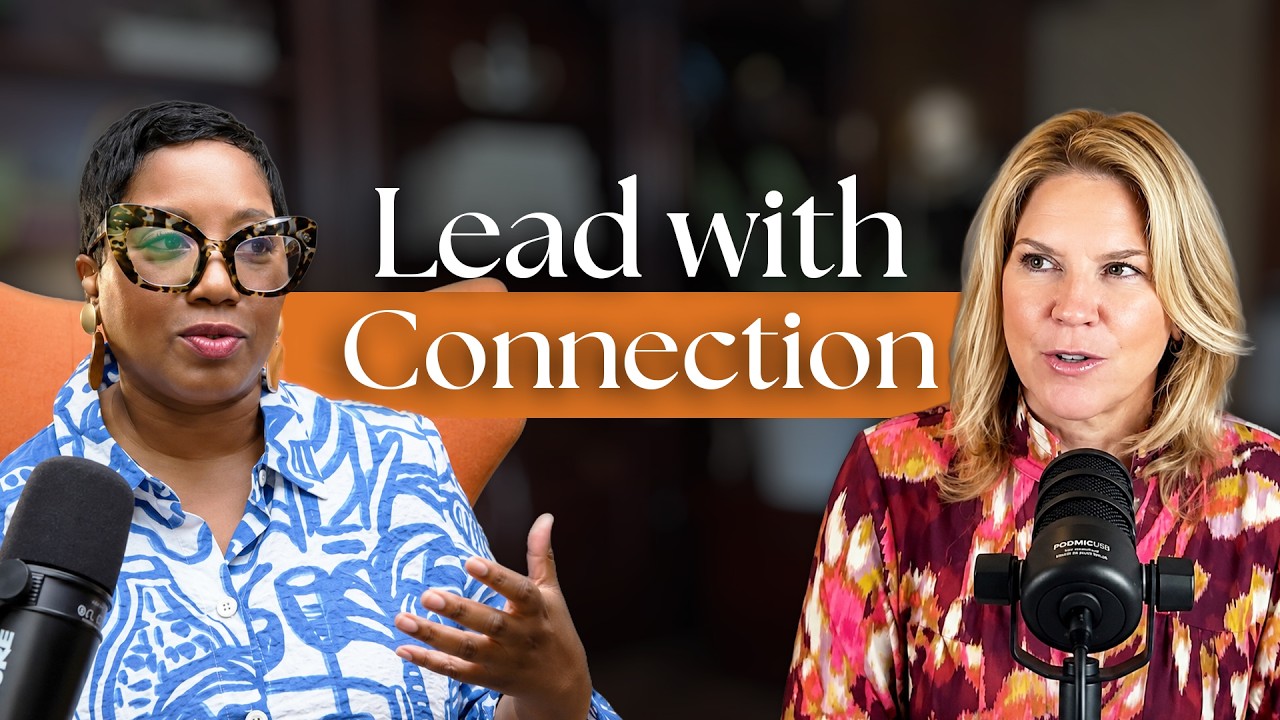
In this episode of The SHIFT Forward, Dr. Cindy Pace speaks with Dr. Michelle K. Johnston, a professor of management at Loyola University New Orleans, executive coach, keynote speaker, and host of The Seismic Shift Podcast.
Michelle and Marshall Goldsmith are the authors of The Seismic Shift in You: The Seven Necessary Shifts to Create Connection and Drive Results, a guide to leading with greater humanity, meaning, and connection.
Together, Cindy and Michelle examine the small changes leaders can make to transform relationships, meetings, teams, and organizational performance.
Leadership Is Experiencing a Seismic Shift
For generations, many organizations rewarded a model of leadership built around fear, shame, blame, control, and hierarchy.
Leaders were expected to project certainty, maintain distance, drive results, and keep climbing. People who produced outcomes could continue advancing even when their behavior damaged the people around them.
Michelle began to notice a seismic change.
Organizations were becoming less willing to tolerate the brilliant but destructive leader. Leaders who demonstrated genuine care for people were beginning to receive greater recognition and responsibility.
At the same time, advances in artificial intelligence raised a fundamental question:
What will leaders contribute when technology can perform more of the work?
Michelle and Marshall Goldsmith heard an answer emerging among leading management thinkers: leaders must lean further into heart and humanity.
Technology can process information, automate tasks, and extend human capability. It cannot replace the reciprocal relationships through which people develop trust, meaning, courage, and commitment.
The future of leadership will not be won by becoming more machine-like.
It will require becoming more intentionally human.
Shift From “What” to “Who”
Many successful leaders spend years focusing on “what.”
They think about:
What must be accomplished
What decision must be made
What problem must be solved
What meeting comes next
What target must be reached
What promotion they want
What title they hope to earn
What responsibility they can add
That focus can produce achievement. It can also produce exhaustion and emptiness.
Some leaders arrive at the highest levels of their organizations only to discover that they sacrificed the relationships that mattered most. They earned the title, compensation, influence, and responsibility they pursued, but the expected sense of fulfillment never appeared.
The first seismic shift is therefore a shift from “what” to “who.”
Michelle describes the experience of Pete November, CEO of Ochsner Health.
During his first years as CEO, Pete’s days were dominated by difficult decisions, organizational changes, and anxiety. He would wake up and allow his calendar to tell him what needed to happen.
He eventually changed the questions he asked himself.
Instead of beginning with a list of tasks, he began asking:
Who do I get to work with?
Who do I get to inspire?
Who do I get to develop?
Who do I get to collaborate with?
Which patients can we help heal?
How can we serve our community?
The work did not become less demanding. His orientation toward it changed.
By focusing on people and service, he changed his mindset. That shift changed his energy, and other people could feel the difference.
Knowing a Person’s Role Is Not the Same as Knowing the Person
Leaders who focus only on tasks can overlook the human beings performing them.
They may know a person’s role, responsibilities, deadlines, and performance indicators without knowing:
What motivates them
What they are proud of
What they are worried about
Which strengths they want to develop
What kind of work gives them energy
What experiences have shaped them
What they hope to accomplish
What support they need
This lack of knowledge leaves human and organizational potential unused.
People are more likely to contribute their best when they believe their leader cares about them, listens to them, wants them to succeed, and recognizes who they are beyond a job description.
That kind of relationship takes time.
Leaders sometimes need to slow down before their teams can move faster.
Explain Why You Are Changing How You Lead
A leader who has historically focused almost exclusively on tasks may feel awkward suddenly asking personal questions.
Employees may also find the change unsettling, especially during a period of uncertainty.
They may wonder:
Why is my leader asking this now?
Is something about to change?
Am I being evaluated?
Is my job at risk?
What does this person really want?
The answer is to frame the change honestly.
A leader might say:
“I recognize that I have been extremely task-oriented and have not spent enough time getting to know you. This may feel different because I have not done it consistently before. I want to change that because I care about you, our relationship, and the work we are doing together.”
Naming the intention reduces uncertainty.
It also acknowledges that trust cannot be demanded simply because a leader has decided to behave differently. Trust must grow through clarity and consistent action.
Ask Your Team What They Are Hearing
Cindy experienced this challenge when she began checking in with her team more intentionally.
Her questions were sincere, but the change in her behavior made people suspicious. They had heard rumors about possible organizational changes and wondered whether her sudden interest was a warning sign.
Instead of dismissing the concern, Cindy changed the conversation.
She asked:
“What are you hearing?”
That question opened an entirely different channel of information.
The team was hearing things that Cindy did not hear in senior-level meetings. They were on the organizational field, encountering signals, conversations, and concerns that had not reached her level.
Their understanding was not inaccurate.
Cindy listened, investigated, and recognized that connection also requires leaders to respect information that does not originate with them.
People frequently fill gaps in information by imagining the worst.
During periods of change, leaders should provide as much context as they responsibly can. When information is unavailable, they can still acknowledge uncertainty, explain what they know, and create space for people to discuss what they are seeing and hearing.
Connection does not mean pretending to have every answer.
It means being willing to listen when someone else may know something you do not.
Your Calendar Reveals What You Truly Prioritize
A leader’s calendar provides visible evidence of their priorities.
If health, family, reflection, relationships, and employee development matter, where do they appear on the calendar?
Without intention, calendars fill with reaction:
One meeting after another
Other people’s requests
Immediate problems
Administrative work
Unplanned interruptions
Tasks that appear urgent but may not be important
Weeks, months, and years can pass while the most meaningful relationships receive whatever time remains.
Michelle invites leaders to open their calendars and ask two questions:
Where am I on my calendar?
Are the most important people in my life on my calendar?
Being on the calendar may mean protecting time for sleep, exercise, reflection, a walk, or simply being away from a screen.
Putting important people on the calendar might mean scheduling team conversations, family traditions, vacations, friendships, mentoring, or time with a partner.
Connection Needs More Than Good Intentions
Michelle shared this advice during a book-launch event attended by her father, brother, and sister-in-law.
She used a family beach trip as an example. If going to the beach together matters, she explained, the date needs to be reserved. Otherwise, life continues moving and another year disappears.
Afterward, her family realized that they had often discussed taking that trip but had never actually done it.
They put it on the calendar—and finally went together.
The same principle applies inside organizations.
Connection rarely survives on good intentions alone. It needs time, structure, and repetition.
Cindy recalled a former chief human resources officer, Susan Podlogar, who modeled this kind of intentionality.
Susan scheduled time to take care of herself, including breaks between meetings and opportunities to walk. She also made time to visit colleagues throughout the office.
Those visits were not simply “management by walking around.”
They were opportunities to ask how people were doing, exchange ideas, discuss something they had read, and remain connected to the team’s daily experience.
Many valuable ideas emerged from those informal interactions.
Hybrid Leadership Requires Intentional Availability
As work has become increasingly hybrid and virtual, leaders cannot rely on physical proximity to create spontaneous moments of connection.
They must lead through connection.
That may mean making themselves available through workplace communication tools, initiating informal conversations, or creating space that does not exist solely to monitor progress.
It also requires awareness of hierarchy.
When a senior leader sends an unexpected message asking, “Do you have five minutes?” an employee may immediately create a frightening explanation.
The leader may only want an opinion about a minor decision. The employee may believe their career is about to change.
A small amount of context can prevent unnecessary anxiety:
“Nothing urgent—I would value your ideas about something when you have a few minutes.”
The leader still initiates the conversation, but the employee no longer needs to invent a story about why it is happening.
Shift From Working “For” People to Working “With” Them
Language shapes relationships.
Even the difference between “working for” and “working with” can affect how people understand their role.
“I work for you” reinforces an invisible hierarchy. It may cause someone to hold back, wait for permission, or assume that the leader’s opinion matters more.
“We work together” creates a different possibility.
It communicates partnership. It gives people greater permission to express enthusiasm, offer ideas, disagree, and lead within their areas of expertise.
Formal accountability does not disappear. The relationship simply stops being defined exclusively by rank.
Cindy began describing the people around her as team members rather than “my team.” She thanked individuals for their leadership on projects, recognizing that leadership is an action rather than only a position.
A manager may provide resources, remove barriers, coach, sponsor, and offer support without personally leading every piece of work.
When leaders recognize this, they create more room for other people to exercise judgment and build confidence before receiving a formal title.
Virtual Meetings Must Be Designed for Connection
Organizations often treat an online meeting as if it were an in-person meeting transferred to a screen.
The host opens the call, reviews the agenda, delivers information, and releases everyone to attend the next meeting.
That may be efficient communication. It is not necessarily connection.
People do not experience the same organic moments online that occur when they enter a room, sit beside someone, exchange an observation, or continue a conversation afterward.
Virtual connection has to be designed.
Michelle recommends beginning with a consistent connection question.
A small team might start every meeting by asking:
“On a scale of one to ten, how are you doing personally and professionally?”
Asking the same question repeatedly gives the leader and team a barometer.
A person who consistently reports feeling like a three may need support. If that person arrives one week feeling like an eight, the team will understand that something meaningful has changed.
Other teams might begin with:
Who deserves a shout-out, and why?
What are you grateful for?
What is one recent win?
What do you need from the team today?
What is taking up most of your attention?
What is something we should celebrate?
The specific question should feel authentic to the leader and appropriate for the team.
Its purpose is not to perform connection. Its purpose is to create an opening through which people can enter the conversation as human beings.
Use Micro Teams to Create Voice and Psychological Safety
Large virtual meetings can also use smaller breakout groups or micro teams.
A presentation to 50 people can easily become one person talking while everyone else listens passively. Cameras turn off, distractions multiply, and participants begin questioning why they needed to attend.
Smaller groups give people more room to speak.
Thoughtfully designed micro teams can increase:
Participation
Psychological safety
Voice
Reflection
Accountability
Relationship-building
The quality of ideas
Facilitation matters.
A breakout group works best when participants understand the question, someone is prepared to guide the conversation, and someone can capture key ideas without preventing everyone else from being present.
The larger group can then reconvene to share insights across teams.
Rotate Meeting Leadership
If one leader always creates the agenda, asks every question, facilitates every discussion, and delivers every update, the meeting becomes dependent on that person.
Rotating facilitation distributes both the labor and the leadership.
One team member might develop the connection question and guide the first meeting of the month. Another can facilitate the following week.
Each person gains experience creating an agenda, managing a discussion, encouraging participation, and connecting the conversation to organizational priorities.
The formal leader remains accountable for direction but no longer needs to control every interaction.
Rotating responsibility also reinforces a larger principle: leadership is something people practice, not merely a position they receive.
Remove Language That Weakens Connection
Words that appear harmless can minimize people, dismiss ideas, or weaken a message.
Consider the word “but.”
A leader might say:
“You did an excellent job on this project, but next time I need you to communicate earlier.”
The listener may immediately discount the praise. Everything before “but” begins to feel like preparation for criticism.
Replacing “but” with “and” changes how the message lands:
“You did an excellent job on this project, and next time I would like us to communicate earlier so we can build on that success.”
The leader can still provide honest feedback. The second statement allows appreciation and improvement to coexist.
Stop Minimizing Yourself With “Just”
The word “just” can reduce the perceived value of a person, request, or contribution.
People say:
I am just the author.
I just need a minute.
It was just an idea.
I am just helping.
I just wanted to ask.
Michelle caught herself repeatedly telling people at an event that she was “just the author” when they approached her with technical product questions.
Someone finally reminded her that she was minimizing herself.
She could instead say:
“I am the author. Let me introduce you to someone with the technical expertise to answer that question.”
Removing “just” does not require exaggerating one’s importance. It means describing one’s role without unnecessarily diminishing it.
Replace “Should” With an Invitation
“Should” can produce a similar problem.
“You should do this next time” can sound judgmental or controlling.
A more collaborative approach might be:
How about trying this next time?
What might happen if we approached it differently?
Could we experiment with another option?
What support would make the next attempt more successful?
Intent is important, but the message that matters is the one the other person receives.
Leaders should consider how their words are likely to land. For a particularly sensitive conversation, it may help to test the message with someone trustworthy before delivering it.
Connection Requires Reciprocity
Connection goes beyond communication because it requires an exchange.
A leader can communicate at people by delivering instructions, updates, presentations, and feedback.
Connection requires movement in both directions.
Someone speaks. Someone listens. The response affects what happens next.
Each person has the opportunity to contribute to the meaning being created.
That reciprocity is one reason connection cannot be reduced to a communication technique. It requires curiosity, responsiveness, humility, and a willingness to be influenced.
Leaders Bring the Weather
The final shift Cindy and Michelle explore is energy.
Leaders sometimes assume that a better physical environment will create a more connected workplace.
An appealing office can help, but it is not enough.
Michelle learned this while speaking with Garry Ridge, the former chairman and CEO of WD-40 Company. Under his leadership, the company achieved extraordinary business results and exceptionally high employee engagement—even while working in an unimpressive, dated office.
The physical environment did not create the connection.
The people did.
Leaders bring energy into every interaction, and that energy is both palpable and contagious.
A team meeting may be one of ten events on a leader’s calendar. For an employee presenting an important idea, it may be the most consequential meeting of the week.
The leader’s distraction, impatience, curiosity, enthusiasm, or tension will affect the room.
As Cindy puts it, leaders bring the weather.
They can arrive like a calm, warm day—or like a tropical storm moving through the hallway.
This does not mean leaders must perform constant positivity.
They are human. They will feel tired, disappointed, anxious, and frustrated.
Leadership maturity involves recognizing that those feelings carry energy. A mature leader becomes more thoughtful about how that energy affects other people and what is required to manage it responsibly.
Connecting Well Sometimes Requires Disconnecting
A person who moves from screen to screen and conversation to conversation without recovery eventually becomes a “Zoom zombie.”
They may still be visible, but their presence, attention, and responsiveness have diminished.
Leaders need to protect time for:
Rest
Movement
Reflection
Meals
Family and friends
Unstructured thinking
Time outside
Life away from screens
Those practices are not separate from leadership performance. They help restore the energy required to listen, connect, and make good decisions.
Leaders must pay attention to their energy, recognize when it is depleted, and organize their calendars in ways that allow them to recover.
Leadership is not a hard science.
It is a dance that requires people to understand what their minds, bodies, relationships, and responsibilities demand.
Connection Is a Human and Organizational Necessity
Human beings need relationships, belonging, empathy, and community.
Disconnection and loneliness affect far more than workplace engagement.
Organizations often encourage people to eat well, exercise, sleep, and manage stress. Meaningful connection also deserves deliberate attention.
Leaders cannot build the workplaces people need if they treat connection as an optional social activity.
Connection affects whether people:
Share important information
Ask for help
Express disagreement
Offer ideas
Admit mistakes
Trust decisions
Support colleagues
Remain engaged
Develop a sense of belonging
Contribute beyond the minimum
The most effective leaders work at connection.
They do not assume it will happen because people share an office, employer, project, or video call.
They create it through their calendars, questions, meetings, language, listening, and energy.
Small Shifts Can Produce Seismic Results
Leaders can begin by asking:
Am I focusing only on what needs to be done, or also on who is doing it?
Do I know the people on my team beyond their roles?
What are my employees hearing that I may not know?
Does my calendar reflect the people and priorities I say matter?
Do my meetings create dialogue or merely deliver information?
Does my language reinforce hierarchy or partnership?
How does my energy affect the people around me?
Am I creating enough space to restore my own capacity for connection?
The shift begins by moving from “what” to “who.”
It continues when leaders explain their intentions, ask better questions, create meetings in which others have a voice, and pay closer attention to how their language lands.
It grows when they treat leadership as something to share rather than something to guard.
It becomes sustainable when leaders manage the weather they bring into the room and step away long enough to restore their ability to be present.
Small shifts in these areas can produce seismic effects.
They can change how people experience a leader, how teams work together, and what an organization is able to accomplish.
Connection does not simply happen.
It must be created—intentionally, consistently, and together.
Add Your Heading Text Here
Lorem ipsum dolor sit amet, consectetur adipiscing elit. Ut elit tellus, luctus nec ullamcorper mattis, pulvinar dapibus leo.